bold idea
Advance health equity and justice for Indigenous peoples of Southeast Asia by co- designing culturally grounded, evidence-based health solutions with Indigenous communities, led by Indigenous Community Health Workers (CHWs).
organization overview
KantiHealth partners with Indigenous communities to co-design culturally grounded, evidence-based health solutions. KantiHealth develops health curricula integrating medical evidence with Indigenous knowledge and trains Indigenous Community Health Workers (CHWs) to conduct community-based TB screening. KantiHealth’s CHWs use appropriate diagnostic technologies and provide culturally adapted treatment support alongside essential health services aligned with community priorities. Working with government, NGOs, and academia, KantiHealth bridges Indigenous communities and public health systems, reduces service gaps, enables early detection and sustained treatment. KantiHealth envisions a future where every Indigenous person is born with the same life expectancy, dignity, and quality of life as non-Indigenous populations.
Personal Bio
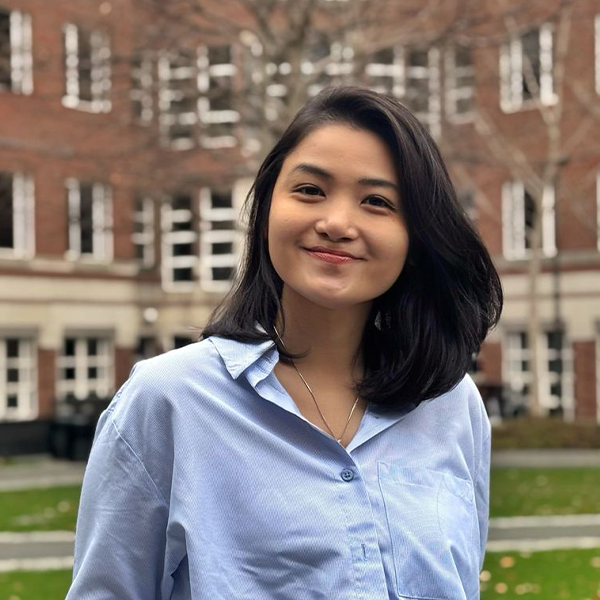
Christy Abigail Wulandari is the founder and director of KantiHealth. A physician and global health practitioner with both clinical and public health experience among Indigenous communities in Indonesia’s remote rainforests and outermost islands, she holds a master’s degree in global health delivery from Harvard Medical School, where she conducted field research on co-designing community-based tuberculosis care for the Orang Rimba. In 2024, she presented KantiHealth’s TB care pilot at the Union World Conference on Lung Health, which was recognized as a promising culturally tailored approach with high treatment success. In 2025, she led KantiHealth to be awarded the Harvard Innovation Lab Social Impact Fellowship Fund.
-
Organization Structure ?
An organization can be structured as a nonprofit, for-profit, or hybrid (a structure that incorporates both nonprofit and for-profit elements).
- Visit website